
XTERRA Greece: What to Expect (And How to Race It Well)
- Kerri-Ann Upham

- Apr 15
- 5 min read

XTERRA Greece has become one of my favourite races on the calendar. I’ve raced here a few times now and it’s always one I really look forward to. The setting is incredible, the atmosphere is relaxed and friendly, and it’s a brilliant early-season race.
But don’t be fooled by the beautiful location — the course itself is tough and can definitely catch people out.
Here are a few things worth knowing if you’re heading there.
✈️ 1. Travel Is Easy
One of the best things about XTERRA Greece is how simple it is to get there.
Fly into Athens International Airport and you’re only about 30 minutes from the race venue in Vouliagmeni. No long transfers or complicated logistics.
Most athletes stay in Vouliagmeni itself. Everything you need is there and it makes race week and race morning much easier.
We normally ask our Airbnb host to organise a taxi from the airport, which works perfectly.
Once you arrive, everything is walkable and you don’t really need a hire car.
When you register for the race you receive a wristband that gives you access to the race village, transition area and the beach. Normally you have to pay to enter the beach, so it’s a nice bonus for athletes.
The organisers are incredibly friendly and everything is clearly laid out, so it’s a very stress-free race environment.

🏝 2. Turn It Into a Holiday
One of the reasons I arrive about a week before the race is simply because it’s a fantastic destination. After a long winter of training in the UK, Greece feels like a proper escape. Warm weather, sea views and great food make it the perfect place to combine racing with a short holiday.
It’s also a great race to bring family or support crew. While you’re racing, they can relax at the beach cafés overlooking the course and still see plenty of the action. Because the bike course is two laps, spectators can often see athletes come through twice. On the run course they can wait near the beach cafés or sun loungers and cheer you in to the finish.

☕ 3. Where to Eat and Refuel
Vouliagmeni has some fantastic cafés and restaurants, and after a few visits I’ve found a few favourites.
The best athlete hangout is Sofi's. Great coffee, cakes and lunches, and you’ll almost always bump into other athletes or organisers there during race week. It’s a great place to catch up after the long winter of training. For something a little more affordable, Artopolis Bakery is excellent for fresh bread, pastries and coffee.
For dinner there are plenty of great Greek restaurants. An athlete favourite is Zaxos Grill, or if you prefer pasta before racing, Pizza Palma is a reliable option.
And after the race?
My go-to treat is ice cream from Waffle House.

🌊 4. Swimming and the Beaches
The race takes place at Akti Beach, a beautiful bay with clear, calm water.
The swim here is usually lovely. The water temperature is comfortable and the sea is often flat, making it a fairly straightforward swim course to navigate.
For many athletes though, this might be their first open water swim of the season, so I always recommend getting in the water for a test swim earlier in the week. It’s a good chance to check your wetsuit and make sure everything feels right.
Most beaches in the area charge an entry fee, but once you’re registered for the race you can access the race beach freely with your athlete wristband.
If you’re exploring during race week, nearby Lake Vouliagmeni is a famous thermal lake that many visitors check out while they’re in the area.

🚵♀️ 5. Respect the Bike Course
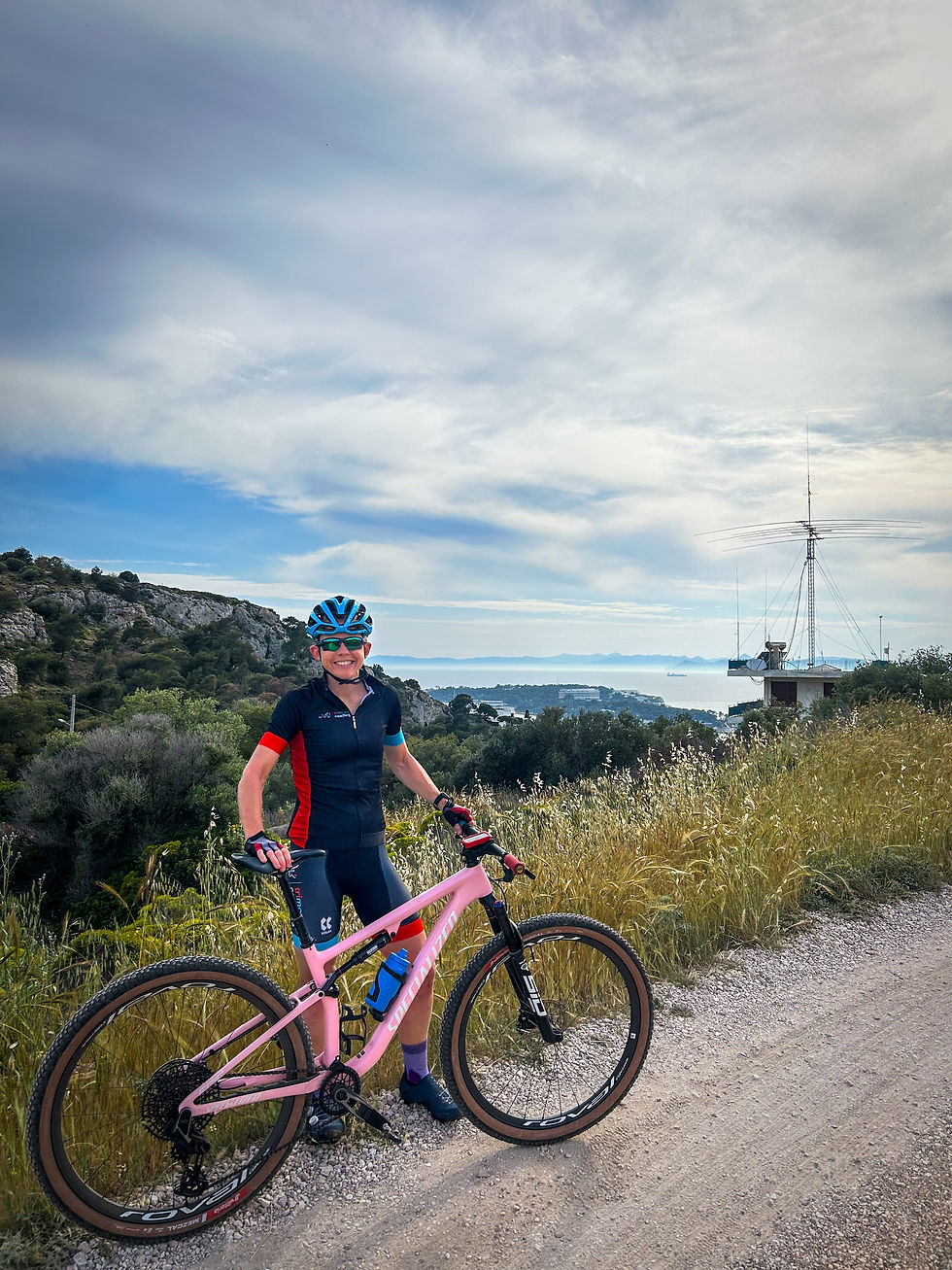
The bike course is classic Mediterranean terrain: dry, loose and dusty.
At speed it can become surprisingly technical. There are a few steep climbs that really test your legs, along with some tricky technical climbs in the middle of the loop where pacing becomes important.
It’s a two-lap course, and I’d strongly recommend riding the full loop at least once before race day so you know what’s coming.
I’ve learned the hard way that if you push too hard on the first lap, the second one can feel very long.
🏃♀️ 6. The Run Is Brutal
The run course is where this race really bites.
I remember the first time I raced here being surprised by just how steep and relentless it felt.
It’s only 11km on paper, but it includes steep climbs, scrambling over rocks and very little chance to recover. Your legs will be screaming.
Some of the descents are rocky and technical, so you need to stay focused even when you're tired.
If you can, I’d really recommend checking out the run course once it has been marked out before race day. Knowing the best lines up and down the rocky sections can make a big difference when you’re racing.
And when you’re exploring the trails, keep your eyes open — you’ll often see tortoises wandering around the course, which always makes me smile during race week.

🔎 7. What Type of Athlete Suits This Race?
XTERRA Greece rewards athletes who are:
Strong climbers on the bike
Confident on loose terrain
Able to handle tough, relentless courses
Physically and mentally resilient
This is not an easy race. The climbing, heat and terrain demand strength and patience.
If you’re preparing for it, the best thing you can train is climbing strength and durability on the bike and run.

🧠 8. My Race Week Routine
When I arrive in Greece I always try to:
Ride the full bike course at least once
Check out the run course once it’s marked
Have a practice swim at the race beach
Spend some time relaxing and catching up with other athletes
And of course… grab a coffee at Sofi’s.
It’s amazing how many athletes you bump into there!

Final Thoughts
XTERRA Greece is one of the most memorable races on the calendar.
It’s tough, technical and demanding, but it’s also incredibly rewarding and set in one of the most beautiful locations in the sport.
My biggest advice?
Pace it. Fuel it. Keep moving forward.
At some point in the race you’ll want to stop. Everyone does.
Just focus on the next step, the next climb, the next corner — and keep moving forward.
And when you finally reach the finish line by the sea, it makes all that climbing worth it.


Comments